


Written by Nhima Sanha RGN on July 27th.

Reviewed by Dr. Tahir on August 28th.
Quick Summary
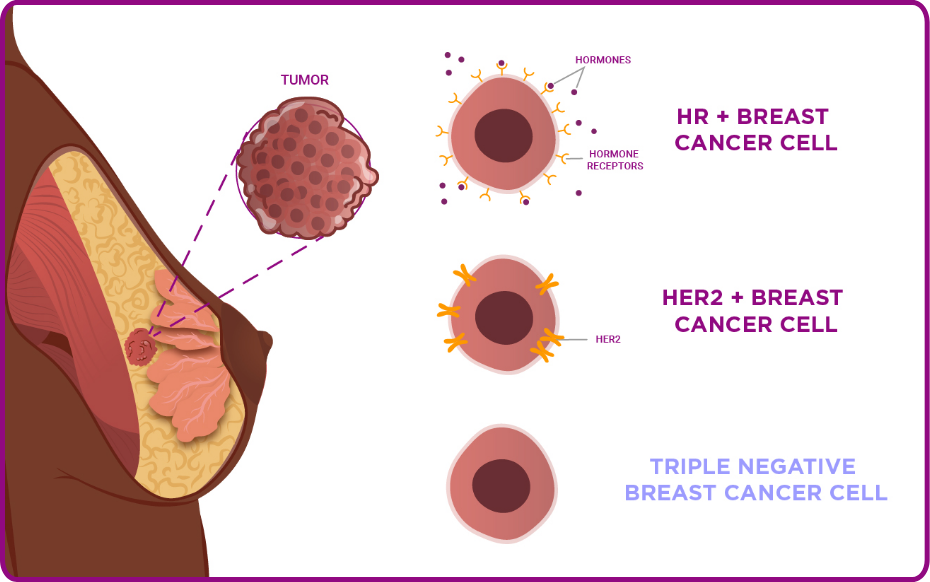
Triple-negative breast cancer (TNBC) is a breast-cancer subtype whose cells lack oestrogen receptors, progesterone receptors and HER2 overexpression/amplification. It often behaves more aggressively than many hormone-receptor-positive breast cancers and does not respond to endocrine therapy or HER2-directed treatments. TNBC is more common in Black women than White women and is also more common in younger women, including women under 40; the size of the ethnic disparity varies between populations and studies.[CFC38] [1,4]
What Triple-Negative Breast Cancer Is
Breast cancer is not one single disease. “Triple-negative” means the cancer lacks the three markers commonly used to guide endocrine and HER2-targeted treatment: oestrogen receptor, progesterone receptor and HER2. This limits those specific treatment options, but it does not mean TNBC is untreatable or that no targeted/systemic treatment is available. Treatment depends on stage and tumour characteristics and may include chemotherapy, surgery, radiotherapy, immunotherapy and other systemic treatments in selected patients.[CFC39] [1,7]
Why It Matters for Black Communities
· TNBC is more common among Black women than White women, although exact risk ratios differ between datasets and countries. Exact US multipliers should not be presented as UK population estimates.[CFC40] [1,4]
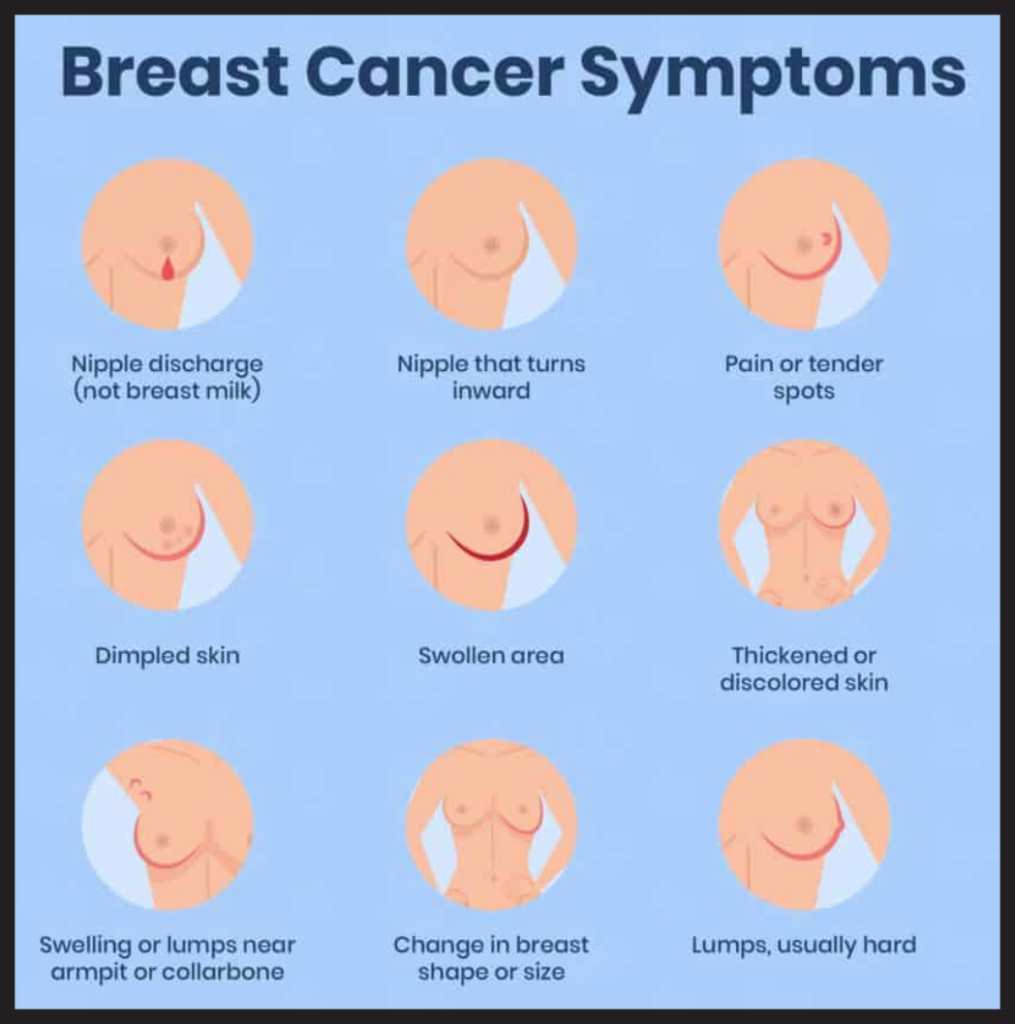
· Around 10-15% of breast cancers are triple-negative, depending on the population studied. [1]
· Cancer Research UK notes that TNBC occurs more often in women under 40 and is more common in Black women. [1]
· US observational research has found higher mortality and treatment differences among Black women with non-metastatic TNBC. These findings are important evidence of disparity in the US, but they should not be quoted as if they measure mortality among Black women with TNBC in the UK.[CFC41] [4]
· The widely cited statement that overall breast-cancer mortality is about 40% higher in Black than White women is a US statistic. It has therefore been removed from this UK/NHS-facing article. UK ethnic patterns in overall breast-cancer incidence and mortality are different.[CFC42] [6]
· Breast Cancer Now cites earlier UK research reporting lower NHS breast-screening attendance among Black African women than White and Black Caribbean women and is funding work to understand the barriers. These figures should be described as estimates from earlier studies, not as the current national screening rate.[CFC43] [5]
Common Signs & Symptoms
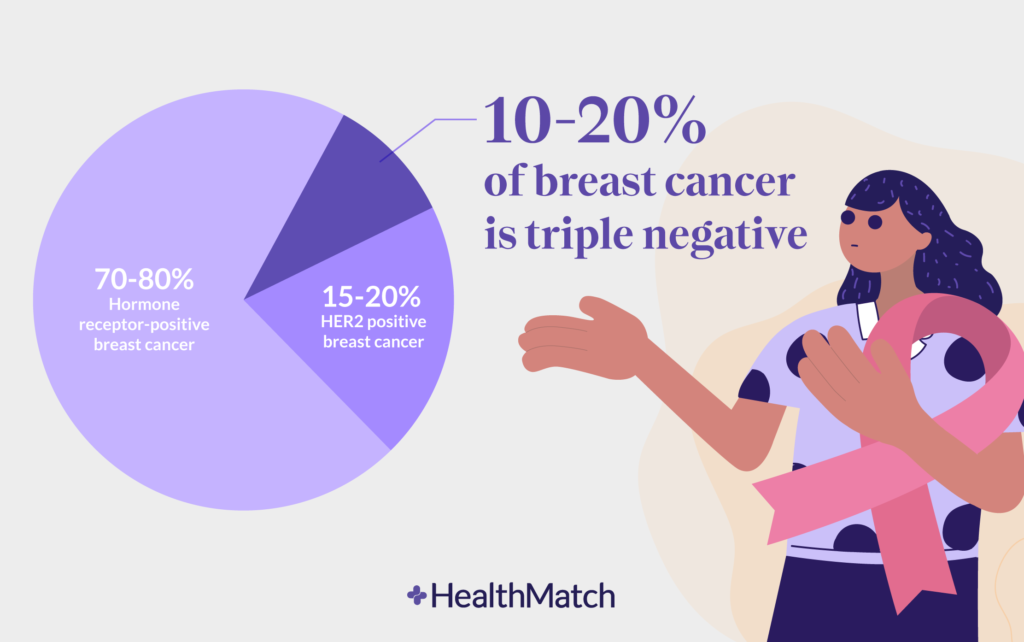
· A new lump or thickening in the breast or underarm
· A change in breast size, shape or skin texture, including dimpling
· Nipple inversion, discharge or persistent nipple/skin change
· Persistent skin redness or rash
· Persistent breast or chest-wall pain that is unusual for you
Any new or persistent breast change should be assessed; TNBC cannot be diagnosed from symptoms alone.[CFC44] [1,2]
Why It’s Often Missed
TNBC can grow relatively quickly, so prompt assessment of a new breast symptom is important. Age should not be used by itself to dismiss a concerning breast change. Referral decisions should follow current clinical assessment and NICE suspected-cancer criteria rather than assumptions based on age or ethnicity.[CFC45] [2]
Screening attendance differs between population groups for complex reasons that may include awareness, practical access, trust and previous experiences of care; the contribution of each factor should not be assumed for an individual.[CFC46] [5]
What You Can Do
· Attend NHS breast-screening invitations when eligible, and do not wait for a screening invitation if you notice a new breast change; contact your GP.
· Know what is normal for your breasts and report a new or persistent change.
· If a breast change persists or worsens after an initial assessment, seek reassessment. Whether an urgent referral is required is determined by clinical findings and NICE referral criteria.[CFC47] [2]
· If diagnosed, ask what your pathology results mean and how ER, PR, HER2, stage and other biomarkers affect treatment options.
What Good Care Should Look Like
· Being taken seriously when reporting a breast change regardless of age.
· Timely assessment and, when NICE suspected-cancer criteria are met, referral through the urgent suspected-cancer pathway. In England, the Faster Diagnosis Standard aims for patients urgently referred for suspected cancer to receive a diagnosis or have cancer ruled out within 28 days.[CFC48] [2,3]
· Clear explanation of cancer type, stage and treatment options.
· Treatment based on clinical need and tumour characteristics, which may include surgery, chemotherapy, radiotherapy, immunotherapy and other systemic treatments where indicated.[CFC49] [1,7]
· Access to psychological and practical support.
Myths vs Facts
Myth: Breast cancer only affects older women.
Fact: Breast cancer can affect younger women, and TNBC occurs more often in women under 40 than many other breast-cancer subtypes. TNBC is also more common in Black women. [1]
Myth: A lump always means cancer – or no lump means no cancer.
Fact: Not all lumps are cancer, and breast cancer can also present with nipple, skin or shape changes. New or persistent changes should be checked.
Myth: Triple-negative means untreatable.
Fact: TNBC does not respond to endocrine therapy or HER2-directed treatment, but effective treatment can include chemotherapy, surgery and radiotherapy, with immunotherapy or other systemic treatments used for selected patients.[CFC50] [1,7]
When to Seek Help
A new lump, persistent skin or nipple change, unexplained discharge or another new breast change should be assessed promptly by a GP. Seek reassessment if a concerning change persists or progresses even after an initial consultation.[CFC51]
Final Takeaway
TNBC is more common among Black women and among younger women, but US mortality statistics should not be imported into UK patient information as though they were UK estimates. Prompt assessment of breast changes, evidence-based urgent referral when indicated, and access to modern stage-appropriate treatment are the key defensible messages.[CFC52]
Verified references
1. Cancer Research UK. Triple negative breast cancer. Current patient information.
2. NICE. Suspected cancer: recognition and referral (NG12). Current breast-cancer referral recommendations.
3. NHS England. Faster Diagnosis Standard: patients referred urgently for suspected cancer should receive a diagnosis or cancer ruled out within 28 days.
4. Cho B, Han Y, Lian M, et al. Evaluation of Racial/Ethnic Differences in Treatment and Mortality Among Women With Triple-Negative Breast Cancer. JAMA Oncol. 2021;7(7):1016-1023. doi:10.1001/jamaoncol.2021.1254. US study.
5. Breast Cancer Now. Research into barriers to NHS breast-screening attendance among Black African women; cites earlier attendance estimates of 49% Black African, 63% Black Caribbean and 67% White women.
6. Delon C, Brown KF, Payne NWS, et al. Differences in cancer incidence by broad ethnic group in England, 2013-2017. Br J Cancer. 2022;126:1765-1773. doi:10.1038/s41416-022-01718-5.
7. NICE technology appraisals/current UK oncology guidance for selected TNBC systemic treatments, including pembrolizumab in eligible patients.