


Written by Nhima Sanha RGN on July 27th.

Reviewed by Dr. Tahir on August 28th.
Quick Summary
Heart failure is a syndrome in which the heart cannot pump and/or fill effectively enough to meet the body’s needs without raised filling pressures. It can cause breathlessness, fatigue and fluid retention. US studies show that heart failure can occur disproportionately at younger ages among Black adults and that heart-failure mortality disparities exist, but these US findings should not be presented as direct estimates for Black people in the UK.[CFC53] [3,4]
In the UK, high blood pressure is an important heart-failure risk factor and is more common in Black African and Caribbean groups, making blood-pressure detection and treatment particularly relevant.[CFC54] [1,6]
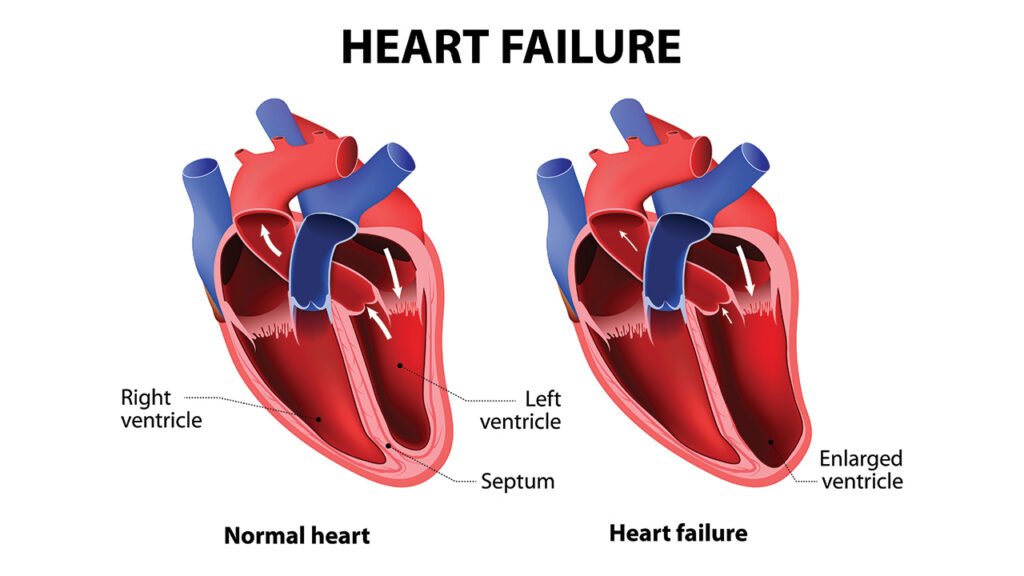
What Heart Failure Is
Heart failure does not mean that the heart has stopped. It means that the heart is unable to pump and/or fill effectively enough to support the body’s needs. This can cause fluid to build up in the lungs and tissues, leading to breathlessness, ankle swelling and fatigue. It is usually a long-term condition managed with medication, treatment of underlying causes and lifestyle measures. [1,2]
Why It Matters for Black Communities
· Much of the strongest evidence for earlier heart failure and higher young-adult mortality in Black people comes from the United States. These data are important but should be labelled as US evidence rather than assumed to quantify UK risk.[CFC55] [3,4]
· In the US CARDIA cohort, heart failure occurring before age 50 was substantially more common among Black than White participants. Black participants who developed early heart failure had a mean age of about 39 at the event; this does not mean that the average age of heart-failure onset in all Black adults is under 40.[CFC56] [3]
· A 2024 analysis publicised by the British Heart Foundation reported a 36% higher mortality risk in combined ethnic-minority participants from pooled heart-failure trials compared with White participants. Because several ethnic groups were combined and the sample came from trials, the finding should not be described as a Black-specific UK population estimate.[CFC57] [5]
· High blood pressure is a major risk factor for heart failure, and UK data show a high burden of hypertension in Black African and Caribbean populations. [6]
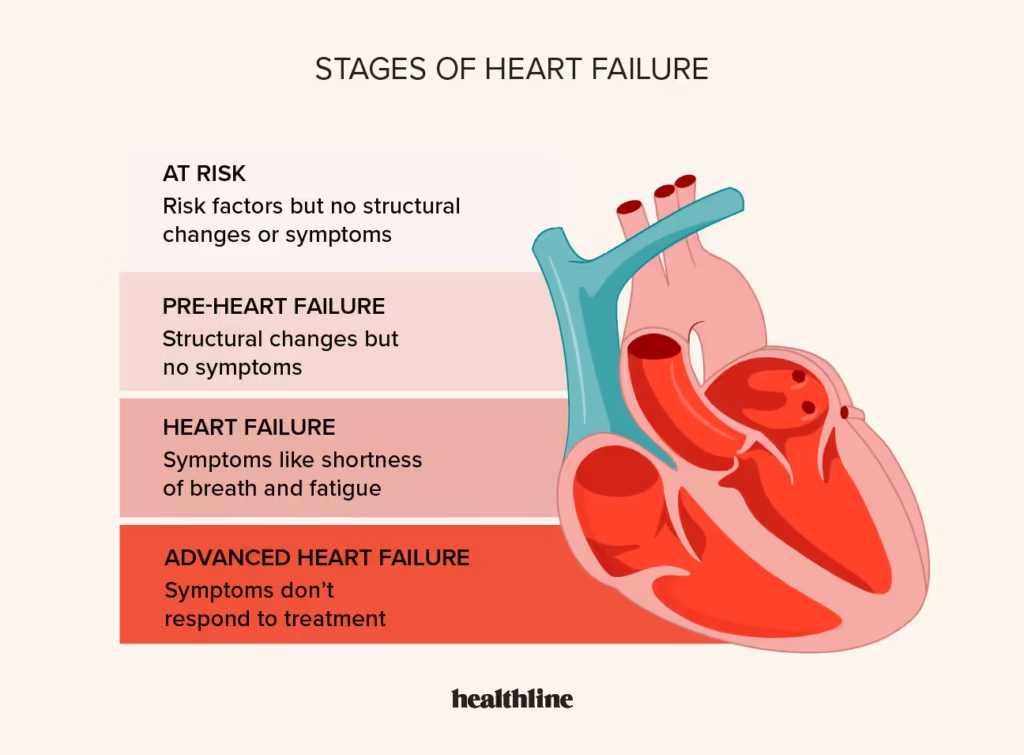
Common Signs & Symptoms
· Breathlessness, especially with activity or when lying flat
· Persistent tiredness and weakness
· Swelling in the ankles or legs
· Rapid or irregular heartbeat
· Persistent cough
· Needing to urinate more at night
· Reduced exercise tolerance
Coughing up pink frothy sputum is not a routine symptom to monitor at home; it can occur with acute pulmonary oedema and, particularly with severe breathlessness, requires emergency assessment.[CFC58] [2]
Why It’s Often Missed
Breathlessness and fatigue are nonspecific and may be attributed to deconditioning, obesity, lung disease or ageing. Symptoms can overlap with asthma and other conditions. Ethnic differences in access or treatment should be discussed only where supported by specific evidence rather than assumed for every Black patient.[CFC59]
What You Can Do
· Have your blood pressure checked and treated when elevated.
· See a GP if you develop persistent or progressive breathlessness, unexplained swelling or fatigue.
· Describe when symptoms occur, how long they have lasted and whether they are worsening.
· Ask whether symptoms could be heart-related, particularly if you have cardiovascular risk factors or known heart disease.
What Good Care Should Look Like
· A clinical assessment of symptoms, examination and relevant medical history.
· For suspected chronic heart failure, NICE recommends measurement of NT-proBNP where appropriate. The result helps determine the urgency of specialist assessment and echocardiography rather than every patient with breathlessness being referred automatically.[CFC60] [1]
· Clear explanation of the diagnosis, likely cause, treatment and monitoring plan.
· Evidence-based medication and follow-up tailored to the type of heart failure and individual circumstances.
· Support to control blood pressure and other cardiovascular risk factors.

Myths vs Facts
Myth: Heart failure only happens to elderly people.
Fact: Heart failure becomes more common with age, but it can occur in younger adults. US evidence shows a disproportionate burden of early heart failure among Black adults, but exact US risk estimates should not be transplanted into UK patient information without qualification.[CFC61] [3]
Myth: Breathlessness is just being unfit.
Fact: Persistent or worsening breathlessness, particularly with swelling or reduced exercise tolerance, should be assessed.
Myth: If my blood pressure feels fine, it is fine.
Fact: High blood pressure often causes no symptoms; measurement is needed to detect it.
When to Seek Urgent Help
Sudden severe breathlessness, chest pain, collapse/fainting or severe breathlessness with pink frothy sputum[CFC62] requires urgent emergency assessment. Call 999 or go to A&E for sudden severe symptoms. [2]
Final Takeaway
Heart failure disparities affecting Black populations are well documented in US research, while UK evidence should be presented with its own population-specific limitations. For a UK audience, controlling high blood pressure, recognising persistent symptoms and following the NICE diagnostic pathway are the most defensible practical messages.[CFC63]
Verified references
1. NICE. Chronic heart failure in adults: diagnosis and management (NG106). https://www.nice.org.uk/guidance/ng106
2. NHS. Heart failure. Current NHS Health A-Z guidance.
3. Bibbins-Domingo K, Pletcher MJ, Lin F, et al. Racial Differences in Incident Heart Failure among Young Adults. N Engl J Med. 2009;360:1179-1190. doi:10.1056/NEJMoa0807265. US CARDIA cohort.
4. Nayak A, Hicks AJ, Morris AA. Understanding the Complexity of Heart Failure Risk and Treatment in Black Patients. Circ Heart Fail. 2020;13:e007264. doi:10.1161/CIRCHEARTFAILURE.120.007264. Primarily US context.
5. British Heart Foundation. 2024 report of a pooled clinical-trial analysis in which combined ethnic-minority participants had a 36% higher mortality risk than White participants; this should not be re-labelled as a Black-specific UK population estimate.
6. NHS/Digital NHS hypertension data and BHF ethnicity resources: hypertension is an important heart-failure risk factor and is more common in Black African/Caribbean groups in UK data.