


Written by Nhima Sanha RGN on July 27th.

Reviewed by Dr. Tahir on August 28th.
Quick Summary
Pre-eclampsia is a pregnancy complication involving new high blood pressure, usually after 20 weeks, together with other signs of maternal organ or placental dysfunction. It can also first become apparent after birth. UK evidence shows that Black women have a higher risk of pre-eclampsia than White women, including a higher risk of preterm disease.[CFC64] [1-3]
Pre-eclampsia can become serious for both mother and baby, so routine antenatal checks and prompt assessment of warning symptoms are important.
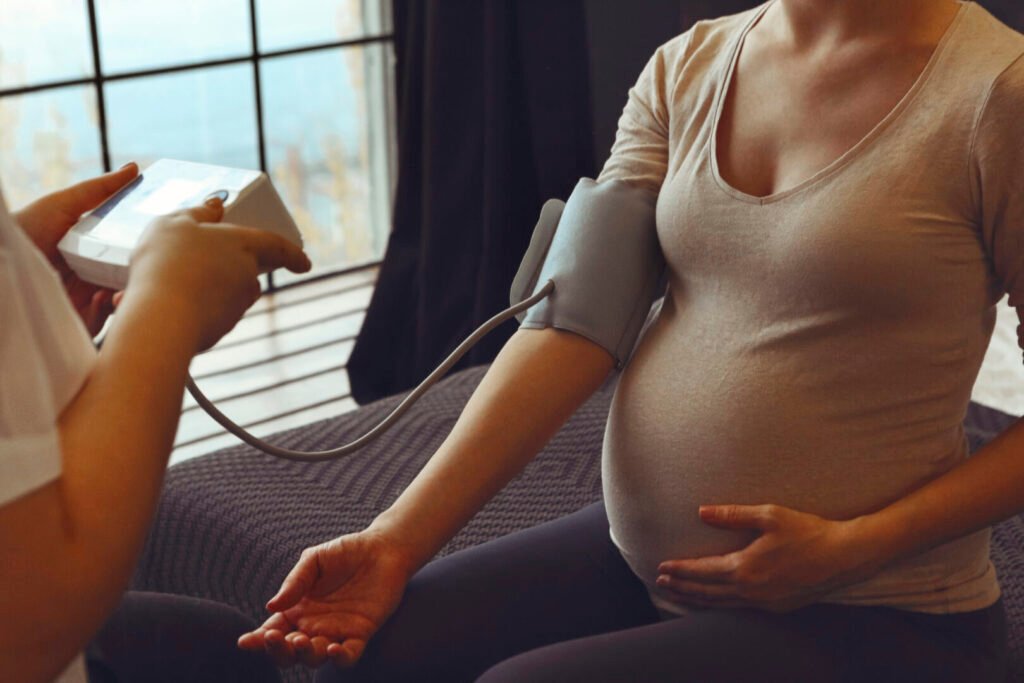
What Pre-eclampsia Is
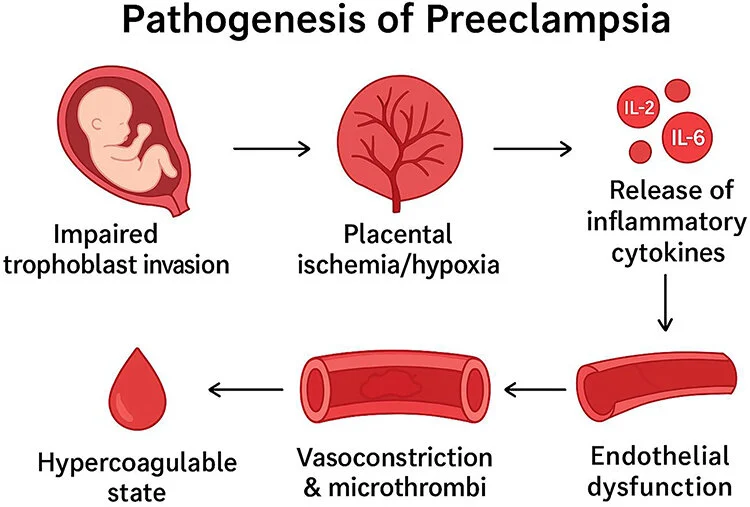
Pre-eclampsia usually develops after 20 weeks of pregnancy and is characterised by hypertension with proteinuria and/or other maternal organ or placental complications. It ranges in severity and can become life-threatening if severe disease is not recognised and managed. [1,2]
Why It Matters for Black Communities
· A large UK cohort and systematic review found that, after adjustment for confounders, Black women had a higher risk of pre-eclampsia than White women, with an especially marked increase in preterm pre-eclampsia.[CFC65] [3]
· The latest MBRRACE-UK 2022-24 data show that Black women in England had nearly three times the risk of maternal death compared with White women (RR 2.72, 95% CI 1.80-4.00). This is an all-cause maternal-mortality statistic and should not be presented as a measure of death specifically from pre-eclampsia. In that triennium, thrombosis/thromboembolism and cardiac disease were the leading causes of maternal death.[CFC66] [4]
· The older MBRRACE 2021-23 estimate was RR 2.27; it is retained only as historical context and should not be described as the latest figure.[CFC67] [5]
· Differences in risk and outcomes are not adequately explained by “race” as a biological category alone. Clinical risk factors, social determinants, access to timely care and healthcare-system factors can all contribute.
Common Signs & Symptoms
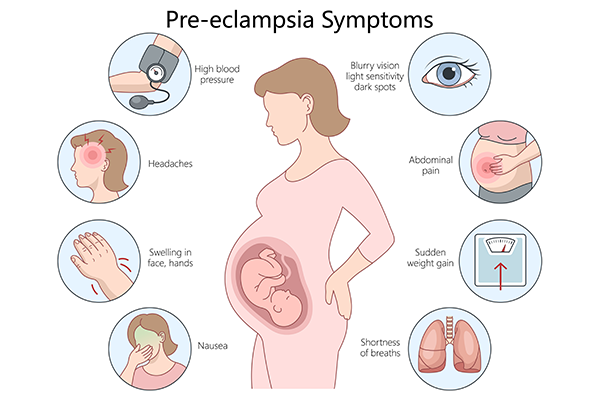
High blood pressure and protein in the urine may be found during routine antenatal checks before you feel unwell. Warning symptoms that need prompt assessment include:
· A severe headache
· Blurred vision, flashing lights or other visual disturbance
· Sudden swelling of the face, hands or feet
· Severe pain just below the ribs
· Vomiting or feeling very unwell
Pre-eclampsia can also occur after birth, so new concerning symptoms in the postpartum period should not be ignored.[CFC68] [2]
Why It Is Often Missed
Some early features can be difficult to distinguish from common pregnancy symptoms, and high blood pressure or proteinuria may cause no symptoms. For that reason, routine antenatal blood-pressure and urine-protein checks are important. The original statements that these checks are commonly “rushed or skipped” and that gaps between appointments matter more than for other conditions were not supported by the cited evidence and have been removed.[CFC69] [1,2]
Broader inequalities in maternity care have been documented, but this article should not state that Black women’s pre-eclampsia symptoms are specifically dismissed as a proven mechanism of delayed diagnosis unless direct evidence is cited.[CFC70]
What You Can Do
· Attend antenatal appointments; blood pressure and urine protein are checked routinely.
· Report severe headache, visual changes, sudden swelling or severe upper abdominal/rib pain promptly.
· If monitoring blood pressure at home, record readings and follow the thresholds/advice given by your maternity team.
· Be specific about new or worsening symptoms and when they started.
· If you have recognised risk factors for pre-eclampsia, your maternity team may recommend low-dose aspirin from 12 weeks according to NICE criteria. Do not start aspirin in pregnancy without advice from the clinician or maternity team responsible for your care.[CFC71] [1]
What Good Care Should Look Like
· Blood pressure measurement and urine-protein screening at routine face-to-face antenatal appointments in line with national guidance. [1]
· Prompt assessment of symptoms suggestive of pre-eclampsia.
· Clear explanation of individual risk factors and warning symptoms.
· Appropriate maternal and fetal monitoring if pre-eclampsia is suspected or confirmed.
· Escalation/referral according to severity and national maternity guidance.
Myths vs Facts
Myth: Swelling in pregnancy is always normal.
Fact: Mild swelling is common, but sudden swelling of the face, hands or feet, particularly with headache, visual symptoms or feeling unwell, can be a warning sign and needs assessment. [2]
Myth: Pre-eclampsia only affects first pregnancies or older mothers.
Fact: It can occur in any pregnancy. Risk varies according to several maternal and pregnancy factors. [1]
Myth: If I feel okay, everything must be fine.
Fact: High blood pressure and protein in the urine can be present without obvious symptoms, which is why routine antenatal checks matter.
When to Seek Urgent Help
During pregnancy, contact your maternity unit immediately if you develop symptoms of pre-eclampsia such as severe headache, visual disturbance, severe pain below the ribs, sudden swelling or feeling very unwell. After birth, or if you cannot contact your maternity unit, use NHS 111 for urgent advice. Call 999 for a seizure, collapse, severe breathing difficulty or another life-threatening emergency.[CFC72] [2]
Reduced fetal movements should be reported promptly to maternity services according to the advice you have been given.
Final Takeaway
Pre-eclampsia is more common in Black women in UK research, and Black maternal mortality remains substantially higher overall, but these are related and distinct facts: the overall mortality gap must not be presented as a pre-eclampsia-specific death statistic. Routine antenatal surveillance, prompt symptom assessment and risk-based prevention and treatment are the most defensible messages.[CFC73]
Verified references
1. NICE. Hypertension in pregnancy: diagnosis and management (NG133). https://www.nice.org.uk/guidance/ng133
2. NHS. Pre-eclampsia. Current NHS guidance reviewed July 2026.
3. Arechvo A, Voicu D, Gil MM, et al. Maternal race and pre-eclampsia: Cohort study and systematic review with meta-analysis. BJOG. 2022;129:2082-2093. doi:10.1111/1471-0528.17240.
4. MBRRACE-UK. Maternal mortality 2022-2024 data brief. In England, Black women had maternal mortality RR 2.72 (95% CI 1.80-4.00) compared with White women.
5. MBRRACE-UK Maternal Report 2025 (2021-2023 data): Black versus White maternal mortality RR 2.27; superseded for the latest overall estimate by the 2022-2024 data brief.
6. NICE/NHS prevention guidance: aspirin may be prescribed from 12 weeks for women meeting defined risk criteria; patients should not self-start aspirin without maternity/clinical advice.
Disclaimer
This review is a scientific and editorial fact-checking exercise. It does not constitute legal advice, clinical governance approval, regulatory approval, or a substitute for independent expert peer review. The conclusions are based on the evidence available at the time of review and should be interpreted in the context of the article’s intended audience, jurisdiction, and clinical scope.