
Written by Thelma Okunuga MPHARM
Reviewed by Abimbola Ekundayo MRCGP

A stroke is a medical emergency that happens when blood supply to the brain is disrupted. It matters because stroke can cause long-term disability or death, especially if treatment is delayed. Black and African people are at higher risk of having a stroke and often experience worse outcomes. This article explains what stroke is, why risk is higher in our communities, how to recognise the signs, and how to seek support.
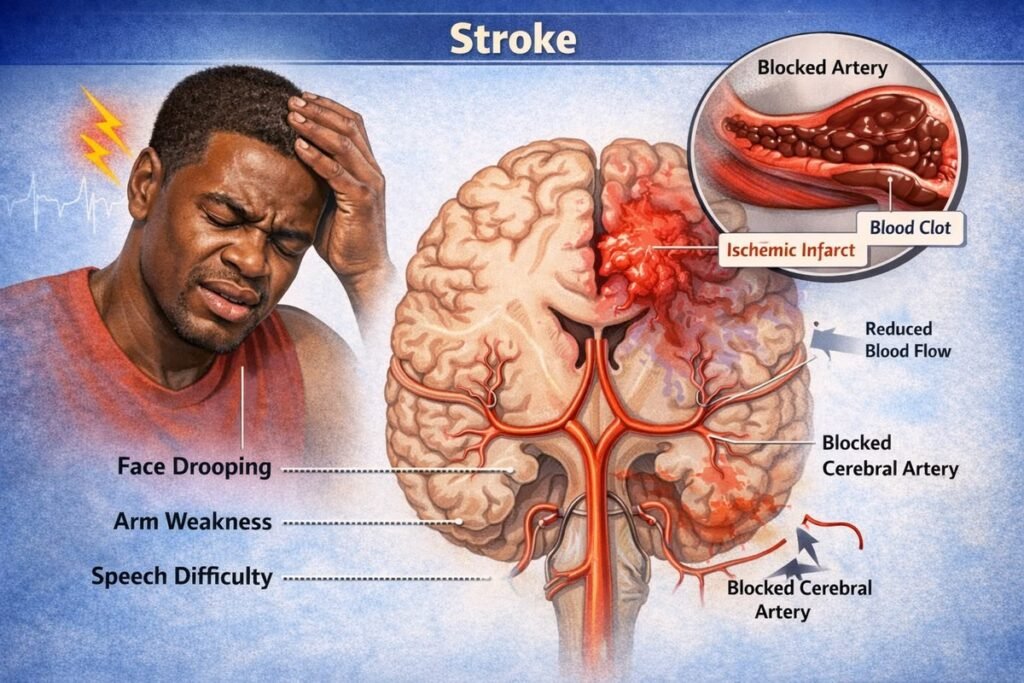
A stroke happens when the brain does not get enough blood and oxygen. This can be caused by a blocked blood vessel (ischaemic stroke) or a burst blood vessel (haemorrhagic stroke). Brain cells begin to die within minutes, which is why quick treatment is vital. The effects of a stroke depend on how quickly help is received and which part of the brain is affected.
Why It Matters for Black & African Communities
Black African and Caribbean people are more likely to have a stroke and to have one at a younger age. They are also more likely to die from stroke or live with long-term disability. This higher risk is linked to higher rates of conditions such as high blood pressure, diabetes, and heart disease, as well as long-term stress, racism, deprivation, and unequal access to healthcare. These differences are driven by inequality, not biology alone.
Common Signs & Symptoms
Stroke symptoms often appear suddenly and may include:
- Face drooping on one side
- Weakness or numbness in one arm
- Slurred speech or difficulty speaking
- Sudden confusion
- Problems with vision
- Severe headache
The BEFAST test (Balance loss, Eye (Vision) changes, Face, Arms, Speech, Time) is commonly used to recognise stroke.
Why It’s Often Missed
Stroke symptoms may be missed if they are mild or temporary. Some people delay seeking help, hoping symptoms will pass. In Black patients, symptoms may be underestimated or not treated with urgency. Language barriers, mistrust of services, and previous negative healthcare experiences can also delay emergency response.
What You Can Do (and Community Support)
Everyone should seek immediate medical help if stroke symptoms appear. Knowing the signs and acting fast can save lives. Managing long-term conditions such as high blood pressure and diabetes reduces stroke risk. Families, community groups, and faith organisations can play a vital role in spreading awareness and supporting recovery.
What Good Care Should Look Like
Good stroke care includes rapid emergency treatment, clear explanations, rehabilitation support, and regular follow-up. Care should be respectful, culturally sensitive, and involve patients and families in decisions. Emotional and psychological support is also an essential part of recovery.
Myths vs Facts
- Myth: “Stroke only affects older people.”
Fact: Stroke can affect adults of any age. - Myth: “Stroke is not preventable.”
Fact: Many strokes are linked to manageable risk factors. - Myth: “Recovery stops after a few months.”
Fact: Recovery can continue for years with the right support.
When to Seek Urgent Help
Stroke is always an emergency. If someone shows signs of stroke, urgent help must be sought immediately. Even if symptoms improve, medical assessment is essential. Speaking to emergency services, a GP, or local health services without delay can save life and function.
Final Takeaway
Stroke is serious, sudden, and life-changing — but fast action saves lives. Black and African communities face higher risk due to long-standing inequalities, not personal failure. Everyone deserves rapid care, clear information, and long-term support. Awareness, prevention, and early response make a real difference.
A stroke happens when the brain does not get enough blood and oxygen. This can be caused by a blocked blood vessel (ischaemic stroke) or a burst blood vessel (haemorrhagic stroke). Brain cells begin to die within minutes, which is why quick treatment is vital. The effects of a stroke depend on how quickly help is received and which part of the brain is affected.
Disclaimer:
This article is for general educational purposes only and is not a substitute for professional medical advice, diagnosis, or treatment. Individuals should consult a qualified healthcare professional for personal medical concerns.
References
NHS (2023) Stroke symptoms and FAST test. Available at: NHS website.
NHS England (2022) Core20PLUS5 – an approach to reducing health inequalities. Available at: NHS England website.
NHS Race and Health Observatory (2022) Ethnic inequalities in healthcare. London: NHS RHO.
NICE (2022) Stroke and transient ischaemic attack in over 16s: diagnosis and initial management (NG128). London: National Institute for Health and Care Excellence.
Public Health England (2018) Health matters: preventing cardiovascular disease. London: PHE.
Stroke Association (2023) Stroke statistics and information. Available at: Stroke Association website.
World Health Organization (2023) Stroke and cardiovascular diseases. Geneva: WHO.
American Stroke association (2024) Stroke Symptoms. Dallas. Available at Stroke Symptoms and Warning Signs | American Stroke Association