

Written by Thelma Okunuga MPHARM on July 27th.

Reviewed by Dr. Tahir on August 28th.
Quick Summary
Keloids are raised scars that grow beyond the boundaries of the original skin injury. They are much more common in people with darker skin tones, including many Black and African individuals, and can develop after acne, piercings, cuts, burns, surgery or even minor skin injuries. Although keloids are benign and not contagious, they can cause itching, pain and significant emotional distress. Understanding why they occur and what treatment options are available can help people seek support earlier. ¹–³
What Are Keloids?
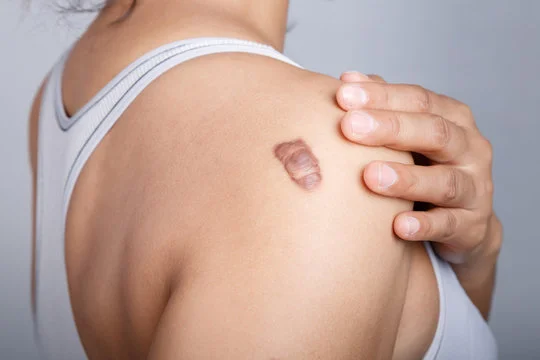
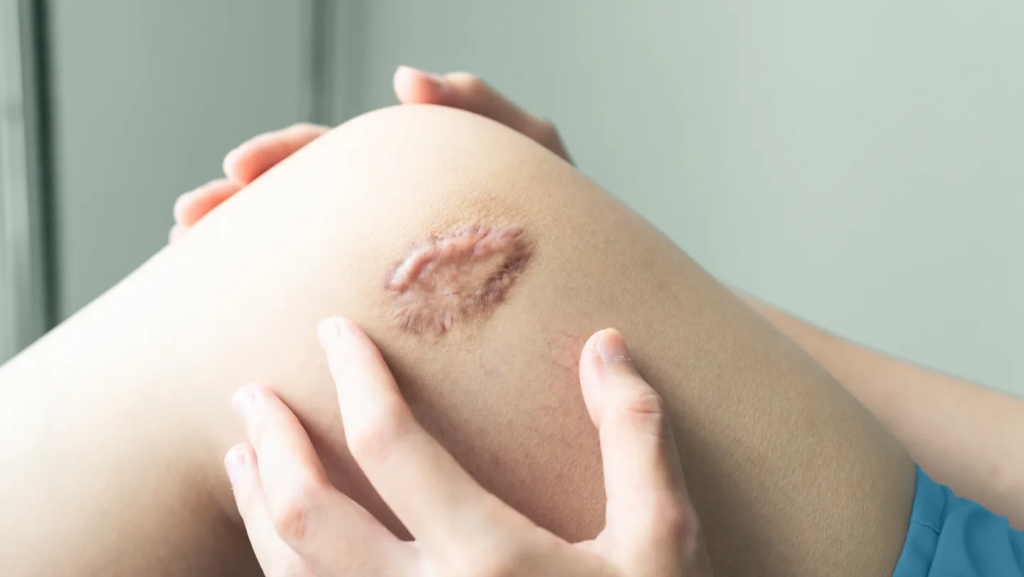
A keloid is a type of scar that forms when the skin produces too much collagen during the healing process. Instead of staying within the area of the original wound, the scar becomes thick, raised and extends beyond the original injury. Keloids may continue to grow over time and can appear on the chest, shoulders, upper back, earlobes and jawline. They are different from normal scars, which usually become flatter and less noticeable with time. ¹–³
Why This Matters for Black and African Communities
Keloids occur far more frequently in people with darker skin tones, including people of African ancestry.⁴ The exact reason is not fully understood, but genetic factors and differences in wound healing are thought to play a role. ¹,⁵ Keloids can cause physical discomfort and can also have a significant impact on confidence, psychological wellbeing and quality of life.⁶
Common Signs and Symptoms
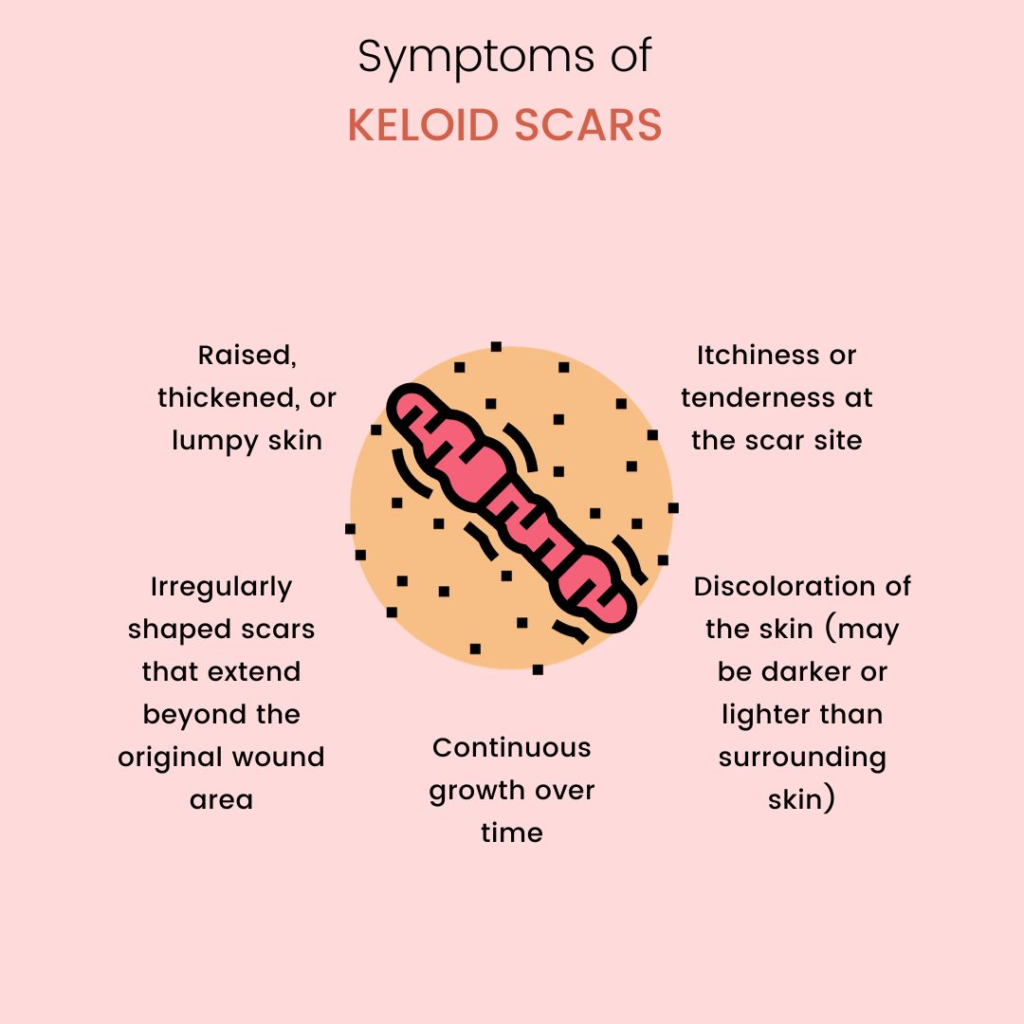
- A raised, thick scar that grows larger than the original injury
- Itching, tenderness or pain in the scar area
- A shiny, smooth or rubbery appearance
- Skin colour that may be pink, red, brown or darker than the surrounding skin
- Gradual enlargement over months or years
- Discomfort when clothing or jewellery rubs against the area
Keloids commonly develop after ear piercing, acne spots, surgical scars, burns and cuts. ¹–³
Why They Are Sometimes Missed
Many people believe that all raised scars are keloids, while others assume that keloids will disappear on their own. In reality, they often persist and may continue to grow. ²,³ Some individuals avoid seeking help because they have been told that treatment is not available or because they worry that further procedures will make the scar worse. The psychological impact of visible keloids can also be substantial and should be considered alongside physical symptoms.⁶
What You Can Do
If you notice a scar becoming increasingly raised, itchy or painful, speak with your GP or a dermatologist. Taking photographs over time can help show whether the scar is growing. Avoid repeatedly scratching the area and discuss any planned cosmetic procedures, such as piercings or tattoos, if you have a personal or family history of keloids. Early assessment and treatment may help limit further keloid growth.¹–³
What Good Care Should Look Like
You should expect to receive a clear explanation of the diagnosis, a discussion of treatment options and information about the possibility of recurrence. Treatments may include silicone gels or sheets, steroid injections, pressure therapy, laser treatment or surgery combined with other therapies. ⁷,⁸ Decisions should be made together with the patient, taking into account both physical symptoms and emotional wellbeing. ⁶,⁷
Myths vs Facts
Myth: Keloids are caused by poor hygiene.
Fact: Keloids are related to the skin’s healing response, not cleanliness. ¹,⁵
Myth: Keloids are contagious.
Fact: They cannot be passed from one person to another. ²,³
Myth: All raised scars are keloids.
Fact: Some raised scars are hypertrophic scars, which usually remain within the original wound and may improve over time. ²,³
Final Takeaway
Keloids are an important and often frustrating skin condition, particularly in Black and African communities. While they are not life-threatening, they can affect comfort, confidence and quality of life. ⁶ If a scar is growing, painful or causing distress, you deserve to have it assessed and discussed properly. Early advice and appropriate treatment can help reduce symptoms and may help limit further growth.¹,⁷
References
1. NHS. Keloid scars [Internet]. London: NHS; 2023 [cited 2026 Aug 9]. Available from: https://www.nhs.uk/conditions/keloid-scars/
2. British Association of Dermatologists. Keloids [Internet]. London: British Association of Dermatologists; [cited 2026 Aug 9]. Available from: https://www.bad.org.uk/pils/keloids
3. American Academy of Dermatology Association. Keloid scars: overview [Internet]. Rosemont (IL): American Academy of Dermatology Association; 2022 Aug 30 [cited 2026 Aug 9]. Available from: https://www.aad.org/public/diseases/a-z/keloids-overview
4. Kiprono SK, Chaula BM, Masenga JE, Muchunu JW, Mavura DR, Moehrle M. Epidemiology of keloids in normally pigmented Africans and African people with albinism: population-based cross-sectional survey. Br J Dermatol. 2015;173(3):852-854. doi:10.1111/bjd.13826.
5. Ogawa R. Keloid and hypertrophic scars are the result of chronic inflammation in the reticular dermis. Int J Mol Sci. 2017;18(3):606. doi:10.3390/ijms18030606.
6. Kassi K, Kouame K, Kouassi A, Allou A, Kouassi I, Kourouma S, et al. Quality of life in black African patients with keloid scars. Dermatol Reports. 2020;12(2):8312. doi:10.4081/dr.2020.8312.
7. Walsh LA, Wu E, Pontes D, Kwan KR, Poondru S, Miller CH, et al. Keloid treatments: an evidence-based systematic review of recent advances. Syst Rev. 2023;12(1):42. doi:10.1186/s13643-023-02192-7.
8. Ogawa R. The most current algorithms for the treatment and prevention of hypertrophic scars and keloids: a 2020 update of the algorithms published 10 years ago. Plast Reconstr Surg. 2022;149(1):79e-94e. doi:10.1097/PRS.0000000000008667.
Disclaimer
This article is intended for educational and informational purposes only and should not be used as a substitute for professional medical advice, diagnosis or treatment. Every person’s circumstances are different, and medical decisions should always be made in consultation with a qualified healthcare professional.
While Black Sciensus CIC aims to provide accurate, evidence-based and up-to-date information, medical knowledge and clinical guidance can change over time. If you have concerns about your health or experience persistent or worsening symptoms, please seek advice from your GP or another appropriate healthcare professional.
If you believe you or someone else is experiencing a medical emergency, seek immediate medical attention through your local emergency healthcare services.