


Written by Thelma Okunuga MPHARM on July 27th.

Reviewed by Dr. Tahir on August 28th.
Quick Summary
Chronic Obstructive Pulmonary Disease (COPD) is a long-term lung condition that makes it difficult to breathe. It is most commonly linked to smoking, but long-term exposure to air pollution, workplace dusts, chemicals and fumes can also increase risk. Ethnicity itself is not a cause of COPD. Inequalities in COPD are strongly influenced by smoking exposure, deprivation, housing, occupational and environmental exposures, and access to healthcare; these factors vary between individuals and communities and should not be assumed simply because someone is Black.[CFC10] [1-4]
Recognising persistent respiratory symptoms can help people receive appropriate testing and treatment sooner.
What Is COPD?
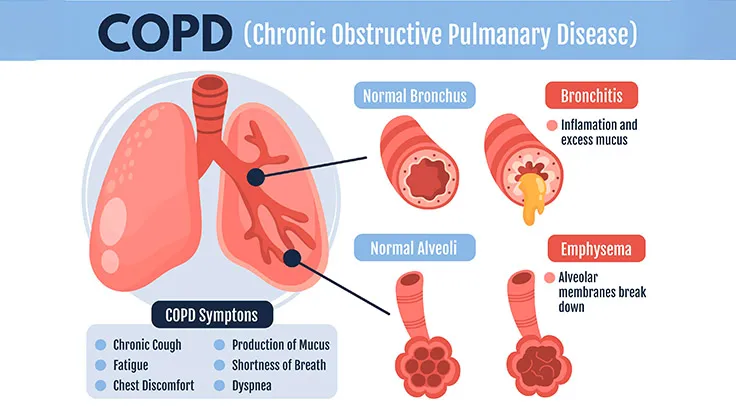
COPD is an umbrella term that includes conditions such as emphysema and chronic bronchitis and is characterised by persistent respiratory symptoms and airflow obstruction. This makes it harder to move air in and out of the lungs and can cause breathlessness, cough and sputum production. COPD is a long-term condition that cannot currently be cured. For people who smoke, stopping smoking is the most important intervention for slowing lung-function decline. Inhaled treatments, vaccination, physical activity and pulmonary rehabilitation can improve symptoms, exercise capacity and exacerbation outcomes in appropriately selected patients.[CFC11] [1-3]
Why This Matters for Black and African Communities
UK evidence does not support a simple statement that COPD is uniformly more common or more deadly in Black people than in White people. Recent England mortality analyses show that COPD inequalities are strongly related to deprivation and do not follow one consistent ethnic pattern.[CFC12] [4]
For Black communities, as for all communities, clinicians should consider individual exposures such as smoking, second-hand smoke, air pollution, poor-quality housing, biomass smoke and workplace dusts or fumes, alongside barriers to timely healthcare. The aim should be equitable prevention, diagnosis and treatment without treating ethnicity itself as the causal risk factor.[CFC13] [1-4]
Common Signs and Symptoms
Symptoms usually develop gradually and may include:
· Shortness of breath, especially during physical activity
· A persistent cough
· Coughing up mucus (phlegm)
· Wheezing
· Frequent chest infections
· Feeling unusually tired
· Reduced ability to carry out everyday activities
Persistent symptoms should not be dismissed as simply “getting older” or being “out of shape.” [3]
Why It Is Often Missed
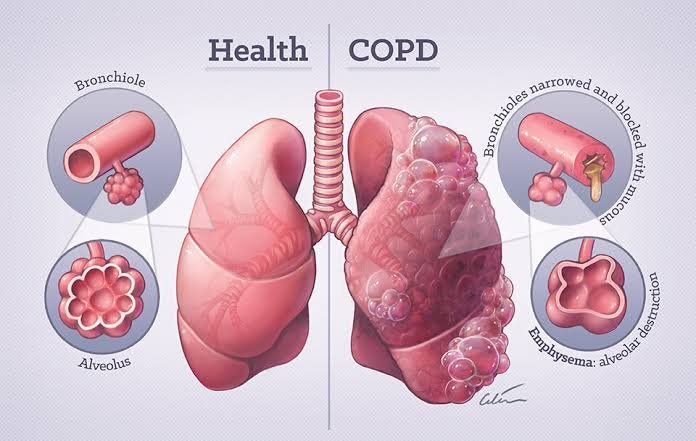
COPD may be diagnosed late because symptoms develop gradually and can be confused with asthma, deconditioning or other causes of breathlessness. Some people unconsciously reduce activity as their breathing worsens. COPD should be considered when compatible symptoms occur alongside relevant exposure history. Diagnosis is confirmed in the appropriate clinical context with post-bronchodilator spirometry demonstrating persistent airflow obstruction.[CFC14] [1,2]
What You Can Do
If you have an ongoing cough, increasing breathlessness or frequent chest infections, speak with your GP. Keep a record of your symptoms and relevant exposures. If you smoke, stopping smoking is the most important step you can take to slow smoking-related decline in lung function. If you work around dust, fumes or chemicals, use appropriate occupational protective measures. Ask whether spirometry is appropriate if COPD is suspected. If COPD is confirmed and breathlessness limits your daily activities, ask whether pulmonary rehabilitation would benefit you.[CFC15] [1]
What Good Care Should Look Like
You should receive an assessment that considers symptoms, smoking history and other inhaled exposures. When COPD is suspected, appropriate spirometry should be arranged to confirm or exclude persistent airflow obstruction.[CFC16] If COPD is diagnosed, your healthcare team should explain your condition, discuss treatment options, teach inhaler technique and provide follow-up. Smoking-cessation support, vaccination, pulmonary rehabilitation and self-management support should be offered where clinically appropriate. [1,2]
Myths vs Facts
Myth: COPD only affects smokers.
Fact: Smoking is the major preventable risk factor in the UK, but long-term occupational and environmental inhaled exposures can also contribute. [1,2]
Myth: Breathlessness is just a normal part of getting older.
Fact: Persistent or progressive breathlessness should be medically assessed.
Myth: Nothing can be done for COPD.
Fact: COPD cannot currently be cured, but treatment and risk-factor reduction can improve symptoms, reduce exacerbations and improve quality of life. [1-3]
Final Takeaway
COPD is a common chronic lung condition that is often diagnosed after symptoms have been present for some time. Persistent respiratory symptoms deserve assessment regardless of ethnicity. Reducing harmful inhaled exposures, confirming the diagnosis with appropriate spirometry and using evidence-based treatment can improve health and quality of life.[CFC17]
Verified references
1. NICE. Chronic obstructive pulmonary disease in over 16s: diagnosis and management (NG115). https://www.nice.org.uk/guidance/ng115
2. Global Initiative for Chronic Obstructive Lung Disease (GOLD). Global Strategy for Prevention, Diagnosis and Management of COPD, 2026 Report. https://goldcopd.org/
3. NHS. Chronic obstructive pulmonary disease (COPD). https://www.nhs.uk/conditions/chronic-obstructive-pulmonary-disease-copd/
4. Office for National Statistics. Inequalities in mortality involving common physical health conditions, England: 21 March 2021 to 31 January 2023. ONS.
5. College/UK respiratory guidance as incorporated in NICE/GOLD for post-bronchodilator spirometric confirmation and pulmonary rehabilitation indications.