
Written by Nhima Sanha RGN
Reviewed by Abimbola Ekundayo MRCGP
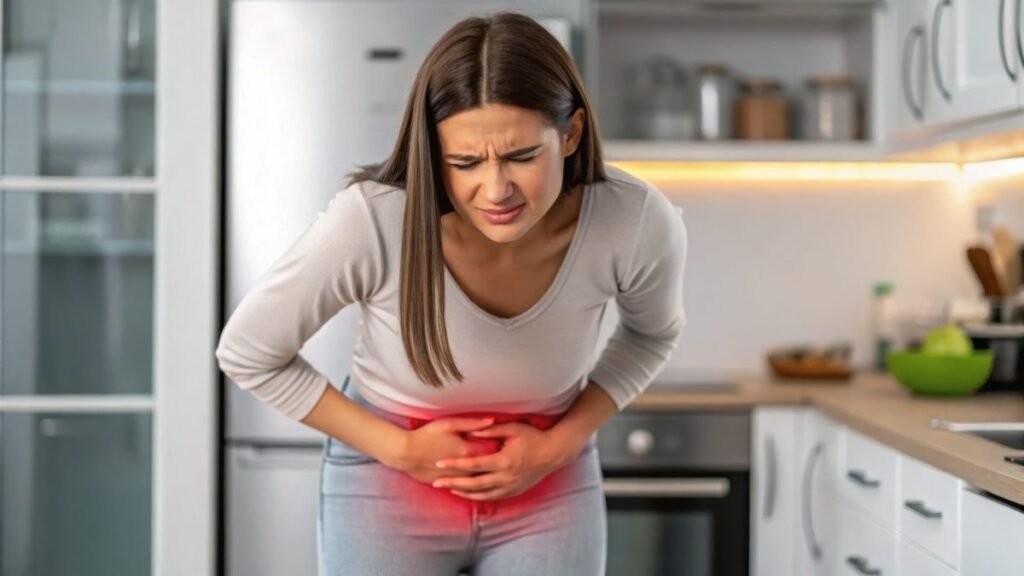
Fibroids are non-cancerous growths that develop in or around the womb. They are extremely common — up to 70–80% of women will have them at some point in their lives. But for Black and minority women, fibroids tend to appear earlier, grow larger and cause more severe symptoms.
What Are Fibroids?
Fibroids are growths made of muscle and fibrous tissue that develop in or around the womb (uterus). They are not cancerous and they do not turn into cancer. But that does not mean they are harmless — for many women, they cause real pain and seriously affect daily life.
Think of them like knots of muscle tissue growing where they should not be. Some women have one fibroid, others have several. They can be as tiny as a pea or as large as a melon.
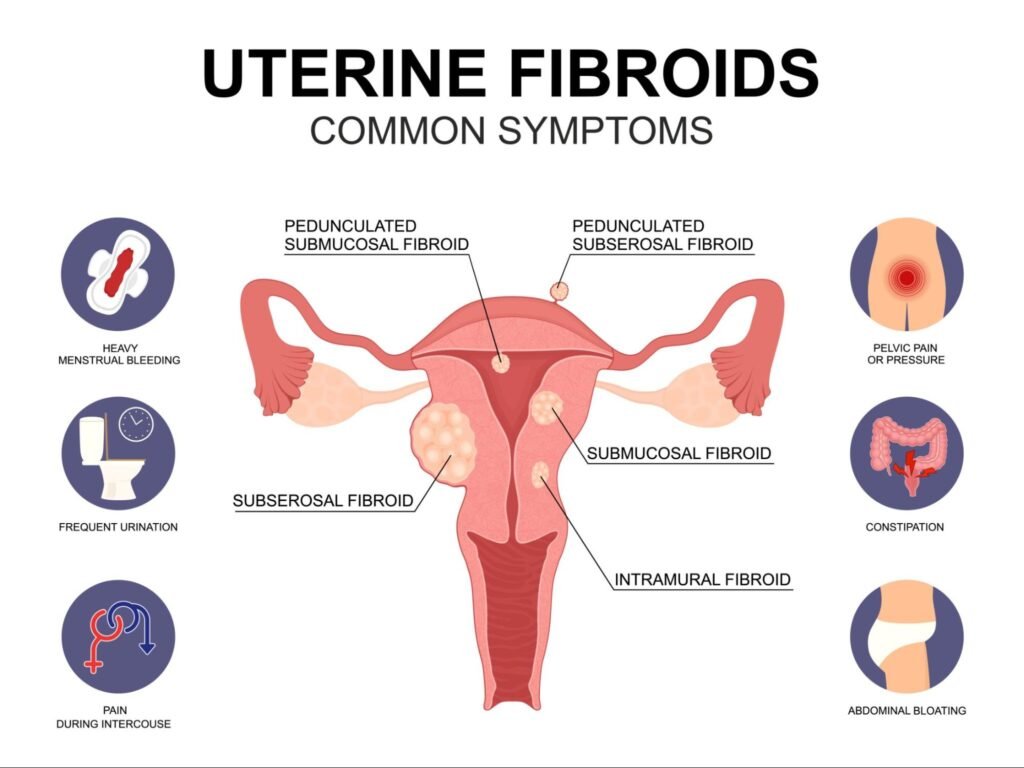
Their location inside or around the womb affects what symptoms they cause. The most common type sits within the womb wall itself. Others grow just under the outer surface of the womb and can become very large. Some sit just under the inner lining of the womb and are most likely to cause heavy bleeding. Others hang on a small stalk, inside or outside the womb.
Fibroids tend to grow during a woman’s reproductive years — roughly ages 16 to 50 — and often shrink naturally after the menopause. The exact cause is not fully known, but they are strongly linked to the hormone oestrogen, which means they tend to grow when this hormone is at its highest.
Why This Matters More for Black Women
Fibroids affect women of all backgrounds — but research and NHS guidance confirm they hit Black and mixed-heritage women harder, earlier, and more severely.
- Black women are 2 to 3 times more likely to develop fibroids than white women
- Nearly 1 in 4 Black women aged 18–30 already have fibroids. By age 35, that figure rises to around 60%
- Black women are diagnosed at a younger age and typically with more numerous and larger fibroids
- Black women are more than twice as likely to end up having a hysterectomy (womb removal) as a result of fibroids
- Black women are hospitalised for fibroids at three times the rate of white women
Why does this disparity exist? Researchers are still working it out fully, but contributing factors include genetic predisposition (fibroids run in families and African ancestry appears to be a significant biological risk factor), lower vitamin D levels which are common in Black women especially in the UK due to limited sunlight and have been linked to fibroid growth, chronic stress and delayed diagnosis.
Common Signs and Symptoms
Many women with fibroids have no symptoms at all — their fibroids are only found during a routine scan. But when symptoms do occur, they can be significant and disruptive to everyday life:
- Very heavy or prolonged periods — soaking through pads or tampons quickly, passing large clots
- Periods that last longer than 7 days
- Painful periods or persistent pelvic pain
- A feeling of pressure or fullness in your lower tummy
- Needing to urinate more often than usual
- Difficulty emptying your bowels or constipation
- Swelling or bloating in the lower abdomen
- Backache or pain running down the legs
- Extreme tiredness or dizziness — often caused by anaemia (low iron from heavy blood loss)
- Difficulty getting pregnant or pregnancy complications
Why Fibroids Are Often Missed or Dismissed
For too many Black and minority women, years pass before they receive a diagnosis. This happens for several reasons.
Normalisation within families and communities. If your mother, aunt or sister had painful, heavy periods, you may have grown up thinking it was simply how periods are. It is not. Heavy, disabling periods are a symptom, not a standard.
Stigma and silence around menstrual health. In many cultures, talking about periods is taboo. This silence can delay women from seeking help — and from knowing what is and is not normal.
Lack of awareness. Despite fibroids affecting up to 70–80% of women, awareness remains surprisingly low. Many women do not know what fibroids are until they are already severely affected.
Misattribution of symptoms. Tiredness, back pain and bloating are easy to put down to stress, diet or lifestyle.
What You Can Do — and Getting Support
You know your body. If something feels wrong, trust that instinct and take action.
Track your symptoms. Keep a simple diary — note the length of your periods, how heavy they are, any pain, and other symptoms like bloating or tiredness. Bring this record to your appointment.
Speak to your GP. Ask for an appointment specifically to discuss your period health. You can say: “I am experiencing heavy, painful periods and I would like to be assessed for fibroids or other causes.”
Bring someone with you. Having a trusted friend or family member in your appointment can help you feel more confident and ensure nothing is missed.
Seek community support. Women’s health groups, community health advocates, and faith communities can all offer emotional strength and practical support in navigating the healthcare system. Online peer communities where other women share their experiences with fibroids — particularly UK-based groups — can also be a valuable source of solidarity and information.
What Good Care Should Look Like
During your appointments you should be informed of your condition, management plans and be offered opportunity to discuss any queries. If treatment is discussed, you should be walked through all available options and your wishes around fertility should be part of that conversation.
Treatment Options
Treatment depends on your symptoms, the size and location of your fibroids, and whether you want to have children in future.
Watchful waiting is appropriate when fibroids are small and not causing significant problems. Your doctor may simply monitor them with regular scans, especially if you are approaching the menopause.
Medication can help manage symptoms.
Uterine artery embolisation (UAE) is a minimally invasive procedure that cuts off the blood supply to fibroids, causing them to shrink (it does not require removal of the womb).
Myomectomy is surgery that removes the fibroids while keeping the womb intact — an important option for women who wish to have children.
Hysterectomy — removal of the womb — is the most definitive.
Myths vs Facts
Myth: “Heavy periods are just part of being a woman.” Fact: Heavy, debilitating periods are a symptom, not a normal experience. They deserve medical attention.
Myth: “Fibroids always need surgery.” Fact: Many fibroids require no treatment at all. When treatment is needed, there are several non-surgical options available.
Myth: “Fibroids are cancerous.” Fact: Fibroids are benign. They do not turn into cancer.
Myth: “If I have fibroids I cannot have children.” Fact: Many women with fibroids conceive and have healthy pregnancies. Treatment can often preserve fertility.
Myth: “Only older women get fibroids.” Fact: Black women in particular are being diagnosed as young as their late teens and early twenties.
Myth: “A hysterectomy is the only cure.” Fact: Other procedures like UAE, myomectomy, and medication can be very effective. Hysterectomy is one option among many.
When to Seek Urgent Help
Go to your GP urgently, or to A&E, if you experience:
- Sudden, severe pelvic pain
- Very heavy bleeding — soaking through sanitary protection every hour for two hours or more
- Feeling faint, dizzy or unable to stand due to blood loss
- A rapidly growing lump or swelling in your abdomen
- Unexplained weight loss alongside your other symptoms
Final Takeaway
Heavy bleeding, chronic pain, pressure and exhaustion are not things you should simply endure. Fibroids are one of the most common conditions affecting women and can have a real impact in daily lives.
This article is for information and awareness purposes only. It is not a substitute for professional medical advice, diagnosis or treatment. Always speak to a qualified healthcare professional about your own symptoms.
References
- NHS (2023). Fibroids. https://www.nhs.uk/conditions/fibroids/
- NICE (2018). Heavy menstrual bleeding: assessment and management. NICE Guideline NG88. https://www.nice.org.uk/guidance/ng88
- Baird, D.D. et al. (2003). High cumulative incidence of uterine leiomyoma in black and white women: ultrasound evidence. American Journal of Obstetrics & Gynecology, 188(1), 100–107.
- Marshall, L.M. et al. (1997). Variation in the incidence of uterine leiomyoma among premenopausal women by age and race. Obstetrics & Gynecology, 90(6), 967–973.
- Stewart, E.A. et al. (2013). The burden of uterine fibroids for African-American women: results of a national survey. Journal of Women’s Health, 22(10), 807–816. https://pmc.ncbi.nlm.nih.gov/articles/PMC3787340/
- Michigan Medicine (2024). Understanding racial disparities for women with uterine fibroids. https://www.michiganmedicine.org/health-lab/understanding-racial-disparities-women-uterine-fibroids
- Black Women’s Health Imperative (2019). It’s Not Normal: Black Women, Stop Suffering From Fibroids. https://bwhi.org/2019/04/03/its-not-normal-black-women-stop-suffering-from-fibroids/
- Sadler, L.C. et al. (2023). Racial disparities in uterine fibroids and endometriosis. American Journal of Obstetrics & Gynecology. https://www.sciencedirect.com/science/article/pii/S0015028223000602
- UCLH NHS Foundation Trust. Fibroids. https://www.uclh.nhs.uk/patients-and-visitors/patient-information-pages/fibroids