


Written by Thelma Okunuga, MPHARM, PGDIP IP

Clinically reviewed by Dr Mohammad Tahir MBBS MRCS
Quick Summary
Prostate cancer is one of the most common cancers affecting men worldwide.[1,2] It is particularly important because outcomes are worse when diagnosis happens late, especially when cancer is diagnosed at an advanced or metastatic stage.[3,4] Black and African men are at significantly higher risk and are more likely to be diagnosed at a younger age and, in some studies, with more advanced disease.[5–7] This article explains what prostate cancer is, why risk is higher in these communities, and how awareness and early action can improve outcomes.[3,5,8]
What This Condition Is
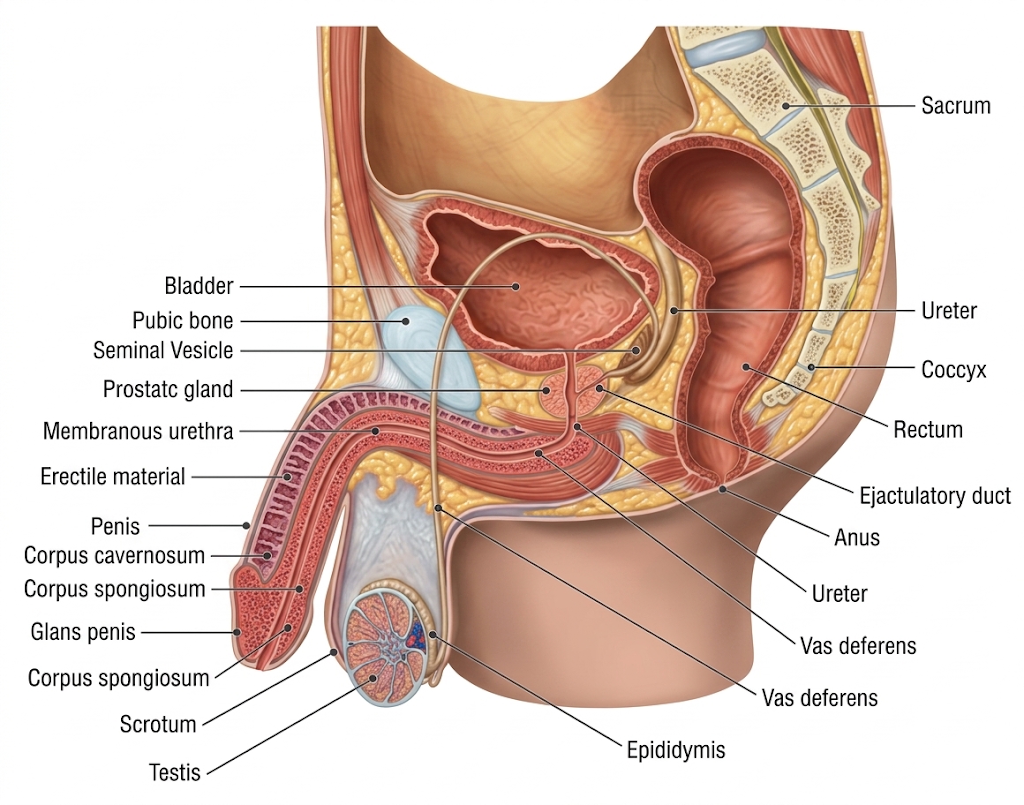
Prostate cancer develops in the prostate gland, which helps produce fluid for semen.[3,9] It occurs when prostate cells grow in an uncontrolled way.[3,9] Some prostate cancers grow slowly and may not cause problems for many years, while others grow faster and need treatment.[3,4,9] The impact depends on how early it is found and how aggressive it is.[3,4]
Why It Matters for Black & African Communities
Black African and Caribbean men are around twice as likely to get prostate cancer as White men in England, and evidence suggests they may be diagnosed at a younger age and may have higher rates of later-stage disease.[5–7] About 1 in 4 Black men will get prostate cancer compared to about 1 in 8 White men, and around 1 in 12 Black men will die from it, compared to around 1 in 24 White men and around 1 in 44 Asian men.[5,8] Factors such as racism, stress, limited access to healthcare, lack of trust in the healthcare system, socioeconomic inequality, and cultural attitudes towards masculinity may contribute to delayed presentation, reduced engagement with care, and poorer outcomes.[6,7,10,11]
Age, Black ethnicity/African or Caribbean ancestry, family history, and inherited genetic factors are recognised risk factors for prostate cancer.[5,8,12] Obesity has been studied in relation to advanced or aggressive prostate cancer, although the evidence for many lifestyle and metabolic factors remains complex and should be interpreted cautiously.[12–14] There is still debate about how much biology, genetics, social determinants, healthcare access, and structural inequalities each contribute to the higher burden of disease, but better genetic testing and more inclusive research may provide more answers in the future.[10,11,15]
Common Signs & Symptoms
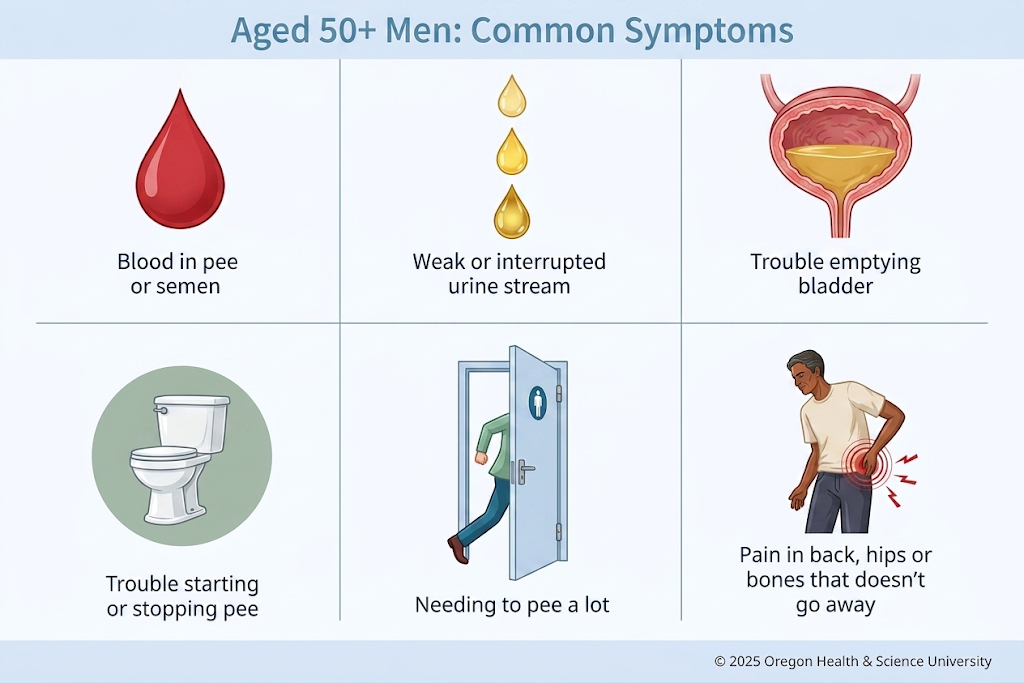
Early prostate cancer often has no symptoms.[3,9,16] When symptoms do appear, they may include difficulty urinating, weak urine flow, frequent urination at night, pain or burning when urinating, blood in urine or semen, and pain in the lower back, hips, or pelvis.[3,9,16] These symptoms can also be caused by non-cancerous conditions such as benign prostate enlargement, urinary infection, or prostatitis, so medical assessment is important.[3,9,16]
Why It’s Often Missed
Prostate cancer is frequently missed because it may not cause symptoms in its early stages.[3,9,16] Symptoms are often mistaken for normal ageing or benign prostate conditions.[3,9,16] Many men avoid discussing urinary or sexual health concerns due to stigma, embarrassment, mistrust, or cultural barriers.[10,11] Research shows that while symptoms themselves are not necessarily biologically different in Black men, later diagnosis, differences in access, reduced engagement with testing or care, and structural inequalities may contribute to worse outcomes.[6,7,10,11]
What You Can Do and Community Support
Men are encouraged to speak to a GP if symptoms persist or if they are concerned about prostate health, especially if they are Black, have a family history of prostate cancer, or are approaching the age where PSA testing may be discussed.[3,8,17,18] In the UK, there is currently no routine national prostate cancer screening programme for all men, and the PSA blood test has both benefits and limitations.[17–19] Men aged 50 or over can ask their GP about a PSA test, and Black men or men with a family history may wish to discuss their individual risk earlier, including the possible benefits and harms of PSA testing.[8,17,18]
Writing down symptoms and questions can support better conversations with healthcare professionals.[3,9] Support from family, friends, faith leaders, and community organisations can help reduce fear and encourage early help-seeking.[10,11]
What Good Care Should Look Like
Good prostate cancer care should involve clear explanations, respectful communication, shared decision-making, and regular follow-up.[4,20] Healthcare professionals should acknowledge higher risk in Black men and ensure culturally sensitive support.[5,8,10,11] Emotional and psychological wellbeing should be considered alongside physical care.[4,20]
Myths vs Facts
There is a common belief that prostate cancer is always slow-growing and harmless, but some forms are aggressive and life-threatening.[3,4,9] Another myth is that no symptoms mean no risk, when many men have early prostate cancer without symptoms.[3,9,16] Open conversations and accurate information are key to early detection and informed decision-making.[3,8,17,18]
When to Seek Urgent Help
Urgent medical advice should be sought if symptoms suddenly worsen, pain becomes severe, or there is concern about general wellbeing.[3,9,16] Men should seek prompt medical help if they cannot pass urine, have visible blood in the urine, severe or worsening back, hip or pelvic pain, new weakness or numbness in the legs, fever with urinary symptoms, or feel acutely unwell.[3,9,16]
Final Takeaway
Prostate cancer disproportionately affects Black and African men, but early awareness and timely care can save lives.[5,8,17,18] Poorer outcomes are likely to be multifactorial, involving structural inequalities, access to care, diagnostic delay, socioeconomic factors, trust in healthcare, and possible genetic or biological contributors.[6,7,10,11,15] Everyone deserves to be heard, respected, and supported to make informed decisions about their health.[20]
Disclaimer: This article is for general educational purposes only and is not a substitute for professional medical advice, diagnosis, or treatment. Individuals should consult a qualified healthcare professional for personal medical concerns.
References
1.Sung H, Ferlay J, Siegel RL, Laversanne M, Soerjomataram I, Jemal A, et al. Global cancer statistics 2020: GLOBOCAN estimates of incidence and mortality worldwide for 36 cancers in 185 countries. CA Cancer J Clin. 2021;71(3):209-249. doi:10.3322/caac.21660.
2.Cancer Research UK. Prostate cancer statistics. London: Cancer Research UK; 2024 [cited 2026 May 29].
3.NHS. Prostate cancer. London: NHS; 2024 [cited 2026 May 29].
4.National Institute for Health and Care Excellence. Prostate cancer: diagnosis and management. NICE guideline NG131. London: NICE; 2019 [last reviewed 2025 Aug 13; cited 2026 May 29].
5.Lloyd T, Hounsome L, Mehay A, Mee S, Verne J, Cooper A. Lifetime risk of being diagnosed with, or dying from, prostate cancer by major ethnic group in England 2008-2010. BMC Med. 2015;13:171. doi:10.1186/s12916-015-0405-5.
6.Down L, Wright P, Hounsome L, et al. Association between patient ethnicity and prostate cancer diagnosis, stage, treatment and survival in England: a population-based study. BMJ Open. 2024.
7.Delgado C. Black men have higher rates of late stage prostate cancer, audit shows. BMJ. 2025;388:r50. doi:10.1136/bmj.r50.
8.Prostate Cancer UK. Black men and prostate cancer. London: Prostate Cancer UK; 2024 [cited 2026 May 29].
9.NHS. PSA test. London: NHS; 2024 [cited 2026 May 29].
10.NHS Race and Health Observatory. Ethnic inequalities in healthcare: a rapid evidence review. London: NHS Race and Health Observatory; 2022.
11.NHS England. Reducing health inequalities in cancer care. London: NHS England; 2022.
12.Cancer Research UK. Prostate cancer risk factors. London: Cancer Research UK; 2024 [cited 2026 May 29].
13.Kyrgiou M, Kalliala I, Markozannes G, Gunter MJ, Paraskevaidis E, Gabra H, et al. Adiposity and cancer at major anatomical sites: umbrella review of the literature. BMJ. 2017;356:j477. doi:10.1136/bmj.j477.
14.Hu MB, Liu SH, Jiang HW, Bai PD, Ding Q. Obesity affects the biopsy-mediated detection of prostate cancer, particularly high-grade prostate cancer: a dose-response meta-analysis of 29,464 patients. PLoS One. 2014;9(9):e106677. doi:10.1371/journal.pone.0106677.
15.Chen F, Madduri RK, Rodriguez AA, et al. Evidence of novel susceptibility variants for prostate cancer and a multiancestry polygenic risk score associated with aggressive disease in men of African ancestry. Eur Urol. 2023.
16.NHS Inform. Prostate cancer. Edinburgh: NHS Inform; 2024 [cited 2026 May 29].
17.Office for Health Improvement and Disparities. Advising men without symptoms of prostate disease who ask about the PSA test. London: GOV.UK; updated 2024 Dec 12 [cited 2026 May 29].
18.Office for Health Improvement and Disparities. PSA testing and prostate cancer: advice for men without symptoms of prostate disease aged 50 and over. London: GOV.UK; updated 2024 Dec 12 [cited 2026 May 29].
19.UK National Screening Committee. Prostate cancer screening recommendation. London: UK NSC; 2024 [cited 2026 May 29].
20.National Institute for Health and Care Excellence. Shared decision making. NICE guideline NG197. London: NICE; 2021.